

Botanical Terms
Surely, at one point or another, you’ve grappled with the paradoxical dilemma that towers over a tomato; how can it be both a vegetable and a fruit? Is one or the other the “official” classification? I knew that there had to be an explanation out there and I was determined to understand how this has become such a common conundrum.
Through my curiosity-fueled research I soon found that a tomato is generally classified as a fruit in the field of botany because it develops from the flower of a plant, contains seeds, and is the reproductive structure of the plant it grows on. However, the reason that a tomato is classified as a vegetable in the culinary world is because it is typically used in savory dishes, since the tomato itself is not typically as sweet as other fruits… er, vegetables? Point being, regardless of your opinion as to whether or not a tomato is definitively a fruit or a vegetable, it really just depends on the context in which the tomato is being discussed. Considering then that more people likely know the fundamentals of cooking than the fundamentals of botany, it makes sense why many of us may find it bizarre that a tomato could be classified as a fruit!
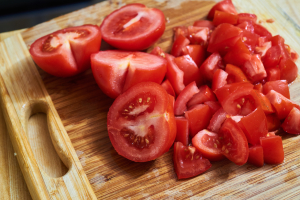
Some juicy chopped fruit.
While I could have cut off my curiosity there, I couldn’t help but wonder if there were other fruits/vegetables out there that had inconsistencies between the culinary and botanical world. Let me preface the rest of this post by saying this is probably going to get an adverse reaction from you if you feel strongly about the tomato “paradox”.
At the time I was first writing this blog post we had white pepper as the spice of the month for our Spice Club program, which provides a free bag of a new spice every month to anyone who asks up at the staff desk on the second floor of the library. I had really never thought much about what black pepper actually was, let alone white pepper, so I decided that this was a good place to continue; after all, black and white pepper must be actual peppers, and therefore vegetables… right?
First and foremost, I was correct in believing that a peppercorn is in fact a type of pepper, which was by no means a surprise. Considering what I learned about tomatoes as well, I should not have been surprised that peppers are also botanically classified as a fruit. However, as I read on, I came to a much more baffling conclusion: all peppers are botanically classified as berries. Yes, you read that correctly. In the field of botany all peppers, such as jalapenos, poblanos, bell peppers, and even the infamous carolina reaper, are classified as berries.
Naturally, I was then compelled to look into what the definition of a berry is, since it must be more specific than our abridged definition of fruit from earlier. What I learned is that a berry is generally a fleshy fruit that develops from a single flower and has one or more seeds embedded inside. So if fruits must have seeds, and berries must have seeds inside, then that opens up quite the can of worms.
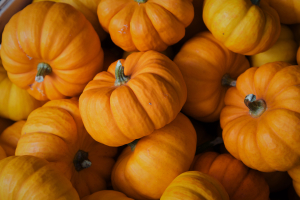
This is a picture of berries.
I immediately began to think of all of the different botanical fruits that have seeds inside of them and was determined to find if they are classified as berries. Tomatoes, avocados, bananas, eggplants, cucumbers, watermelons, and even pumpkins are botanical berries. Note that there are some technical differences between some of these botanical berries, for reasons that I encourage you to take the time to research yourself, but they are all botanical berries nonetheless!
Admittedly, there are also some outliers to the “rules” I listed above – not all fruits with seeds inside of them are technically berries. Cherries are considered drupes, apples are considered pomes, raspberries are considered aggregate fruits, and strawberries are accessory fruits. Now surely you just did a double take, considering I just made the claim that raspberries and strawberries are in fact not berries (botanically, of course).
But alas, dear reader, this is where I am going to leave you on a bit of an informational cliff-hanger and again encourage you to go out and do some research into the fantastical and frustrating field of botany. As much as I would like to go more in-depth with my personal dive into the field, I am also a big advocate for adults allowing themselves to be curious, so take a look at the resources offered below and consider checking them out and learning why strawberries and raspberries are not botanical berries.
As an added fun fact, after writing this blog post, I found out that vegetables don’t exist in the field of botany!



Add a Comment
Now we'd like to hear your thoughts! Comments and suggestions are welcome!