Teen Time: Smoothies!

Hey, teens, with all this time at home, have you started to try new recipes? I do love fancy beverages from local cafes, but I’ve been excited to experiment with my own versions over this last year.

Back in the day, I used to work at a coffee shop that also happened to sell stellar fruit smoothies. I love love loved their drinks, and splurged more often than I probably should have as a poor college student. When I left for library work, I started to make my own smoothies at home. They’re SO easy to make – and super tasty! It may seem like too much trouble, but all you need is a blender, fruit or veg, and ice. I mean, what recipe is easier than that?

You can use frozen fruit, fresh fruit, canned fruit – or a combination. Add yogurt, milk (or dairy free alternative), or a little juice. Add a bit of honey or sugar if you need it a little sweeter. Be a rebel and try adding spinach or other vegetables; you never know what deliciousness you may invent.

As the weather starts to warm up, I’m getting into my smoothie groove again, and thought I’d share a favorite recipe with you. Give it a try, and share your snaps on Instagram. Be sure to tag us @eclibraryteens.

Tropical Burst Smoothie

3/4 cup frozen pineapple
3/4 cup frozen mango
3/4 cup frozen strawberries
1/2 fresh banana
1/2 cup plain yogurt (or a splash of non-dairy milk)
4-5 ice cubes (or about 1 cup)

Throw the frozen fruit into a bowl. Microwave for 90-120 seconds to thaw out (or leave on the counter for a few hours. But who has time for that?). Once fruit is mostly thawed, place in blender. Add banana, yogurt, and ice. COVER with lid. You may want to hold the lid down to be safe. Smoothie on the ceiling is NOT fun. Blend until smooth. Poor into a glass, add an eco-friendly straw, and enjoy in the sunshine.*

Looking for more smoothie recipes? Google compiles TONS of great suggestions. Or try some of these awesome e-books from the library. We’ve got smoothie books for DAYS. You may need to log in to to see all of them. Use that library card power!

Freading Smoothie E-Books 

Hoopla Smoothie E-Books

*Maybe clean the blender for your parents? Or double the recipe and bribe them with a smoothie so you don’t have to clean.

Check Out STEAM Resources on Hoopla

If you’re looking for some fun and interactive experiments to introduce, expand, or enhance your kids’ knowledge in the areas of STEAM (or if you’re simply looking for a fun afternoon project!), check out the links below for a wide variety of STEAM-related e-books through Hoopla.  There are activity books for young children through teen to support Science, Technology, Engineering, Art, and Math. E-materials may be checked out from Hoopla with your Eau Claire library card.

Quick Links

Building Brains by Singing with Your Children

Parents, did you realize that children develop essential skills that help them learn how to read long before formal reading instruction begins? These are called early literacy skills, and they include vocabulary, print motivation, phonological awareness, print awareness, letter knowledge, and narrative skills.

How do children gain these skills, exactly? The answer is simple. Through everyday nurturing interactions with you! When you talk, read, sing, and play with your children, you are helping them build these foundational skills, and you’re strengthening your bond with your child in the process. Win, win!

*This is the third post in a series of blogs about utilizing the early literacy practices (talk, read, sing, play) to foster your child’s development. This entry focuses on the practice of singing.

No musical training? No worries! It is your voice that soothes and comforts your child, describes the world to your child, lets your child know they are loved. Rest assured, your singing voice can do all of that, too. The benefits of singing and engaging your child in musical experiences extend across all domains of development, including the following:

Language/Literacy

  • Singing fosters phonological awareness, the ability to hear and manipulate units of sound.
  • It reinforces and develops vocabulary, especially if unfamiliar words are explained.

Social/Emotional

  • Singing to or with your child is a positive and nurturing interaction that strengthens your bond.
  • It can ease transitions between activities and help a less desirable activity be more fun.
  • It can calm a fussy baby or toddler (and a hardworking parent).

Cognitive

  • Singing and related musical activities promote the development of crucial executive functioning skills. These skills are deemed essential for school readiness and include a child’s ability to focus attention, utilize working memory, and exercise self-control. Learn how to use music and other everyday activities to foster these skills in your child from Harvard’s Center on the Developing Child.

Physical

  • Young children strengthen muscles and develop gross motor skills as they move to music.
  • Young children develop fine motor skills when they practice fingerplays (e.g., Itsy Bitsy Spider, Where Is Thumbkin, etc.).

Tips

Add more music to your family’s routine by trying one or more of the following activities:

  • Make up a lullaby for your child. Find inspiration with the endearing Carnegie Hall Lullaby Project.
  • Insert your child’s name into familiar tunes, like “Old [Mateo] Had a Farm.”
  • Share fingerplays and action rhymes with your child. Check out the library’s Fingerplay Fun videos to expand your repertoire.
  • Make a shaker, like these. Or these!
  • Make a drum set with pots, pans, food storage containers, and wooden spoons for mallets.
  • Make a playful craft microphone for you and your child, and put on a show.
  • Plan a family dance party or a family lip syncing contest.
  • Read musical books! View a handy dandy musical book list here.
  • Read nursery rhymes! View a handy dandy nursery rhyme book list here.

Enjoy singing and engaging in other musical experiences with your child! Find information and tips about the other early literacy practices here: talking, reading, and playing.

Additional Resources 

Baby Music: The Soundtrack to Your Child’s Development

A resource from UNICEF on how making music, not just listening to it, impacts child development. Includes a link to a related Mini Parenting Masterclass (5 minutes).

Beyond Twinkle, Twinkle Little Star

An article from NAEYC and Zero to Three on how music supports each domain of development and what early childhood professionals can do to enhance early learning experiences with music.

Book Clubs (Grades K–2)

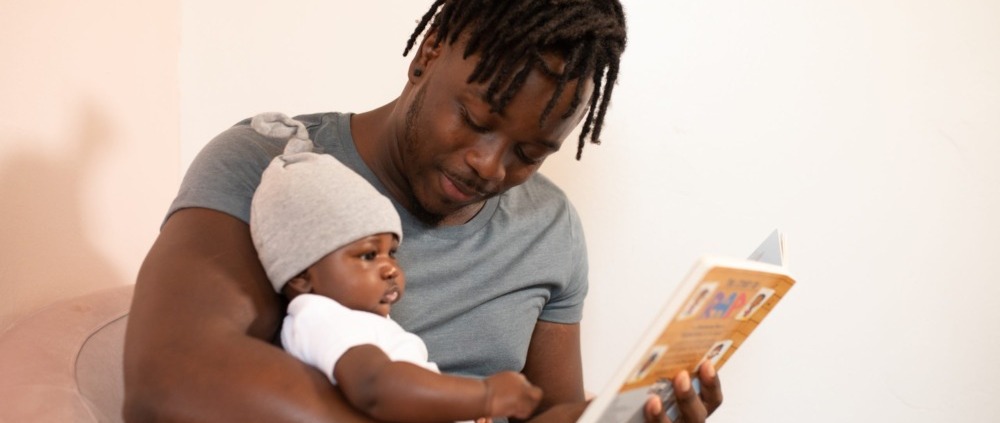
Building Brains by Reading with Your Children

Parents, did you realize that children develop essential skills that help them learn how to read long before formal reading instruction begins? These are called early literacy skills, and they include vocabulary, print motivation, phonological awareness, print awareness, letter knowledge, and narrative skills.

How do children gain these skills, exactly? The answer is simple. Through everyday nurturing interactions with you! When you talk, read, sing, and play with your children, you are helping them build these foundational skills, and you’re strengthening your bond with your child in the process. Win, win!

*This is the second post in a series of blogs about utilizing the early literacy practices (talk, read, sing, play) to foster your child’s development. This entry focuses on the practice of reading.

In “Becoming a Nation of Readers,” a landmark 1985 report, experts declared that “the single most important activity for building the knowledge required for eventual success in reading is reading aloud to children.” The positive effects of regularly reading aloud to your children are numerous and include the following:

  • builds connections in their brain
  • develops their language and vocabulary skills
  • supports their social/emotional development
  • strengthens their relationship with you
  • teaches them about themselves and the world in which they live

There is simply no denying the incredible and dynamic power of reading aloud to your children.

But with so many books and so little time, where does a parent begin? A great answer to this question is only three words long: your public library. Library staff is knowledgeable about the collections and eager to help your kiddos find books that match their interests and abilities. Reach out to us by phone (715-839-5007) or email (ysstaff@eauclaire.lib.wi.us) to start a conversation.

In the meantime, check out our staff curated book lists on a variety of topics for a variety of readers on our website and on our Bibliocommons profile. You’ll find great books to share with babies, toddler-tough picture books, funny stories, books for dinosaur fans, not your average lift-the-flap interactive stories, and so much more.

Okay, I’ve got some great books. Now what?

The greatest benefits from reading aloud can be achieved when you and your child are engaged in the reading experience. Enhance your child’s engagement and your own enjoyment by utilizing these tips:

  1. Read with expression! This may take some practice, but your kids will love it! 100% money back guarantee! Here are some vocal contrasts to add expressive flair:
    • Play with your pitch. Experiment with using a high voice and low voice to add depth to a character.
    • Adjust your volume. Perhaps you’ve reached a suspenseful part of the story and want to speak quietly for dramatic effect. Perhaps a character is surprised and speaks at an elevated volume.
    • Consider your speed. Avoid rushing. Relish each word. Make use of pauses and silence. Read quickly only when the action of the story calls for it. In general, a slower rate of speed gives your child more time to process what they are hearing and seeing on the page.
    • Experiment with your tone. Play around with the quality of sounds your voice can make. Gravelly, airy, nasal, etc.
  2. Be interactive! Invite your child to actively participate in the read aloud experience by doing the following:
    • Discuss the cover art and illustrations. Remember, while you focus on the text, your child is “reading” and deriving meaning from the illustrations. Talk with your child about the art and how it relates to the story.
    • Ask open ended questions. These enable a child to demonstrate their understanding and practice their narrative skills. Here are some examples:
      • What do you notice? They may observe something you haven’t yet noticed.
      • Why do you think he feels sad? This can help build emotional intelligence.
      • What do you think is going to happen? This is an opportunity to use critical thinking skills.
    • Include your children by inviting them to:
      • Do the actions. Many picture books include bold actions. Don’t just read it, do it!
      • “Read” the repeated phrases. Your child will quickly learn any repeated refrains in a story. After two or three times, start the phrase and let your child finish it.
      • Finish the sentence in a familiar text. Likewise, your child’s favorite books will soon be memorized. Invite them to finish the sentence or even “read” the book to you.
      • Complete the rhyme. Rhyming books are great for developing phonological awareness—an early literacy skill. Start the rhyme, but pause at the end to see if your child can finish it.
    • Discuss the book afterward. What did your child like? Dislike? What was their favorite part? What do they think the characters will do next?

Reading aloud with your children every day is beneficial for their development and can be both joyful and rewarding for you and your child. For more information and ideas on this topic, check out these great additional resources:

Enjoy reading with your child! Find information and tips about the other early literacy practices here: talking, singing, and playing.

Building Brains by Talking With Your Children

Parents, did you realize that children develop essential skills that help them learn how to read long before formal reading instruction begins? These are called early literacy skills, and they include vocabulary, print motivation, phonological awareness, print awareness, letter knowledge, and narrative skills.

How do children gain these skills, exactly? The answer is simple. Through everyday nurturing interactions with you! When you talk, read, sing, and play with your children, you are helping them build these foundational skills, and you’re strengthening your bond with your child in the process. Win, win!

*This is the first in a series of blogs about utilizing the early literacy practices (talk, read, sing, play) to foster your child’s development. This entry focuses on the practice of talking.

Your talk has the power to build your child’s brain. While it is important to talk to your child, research shows it is more impactful to talk with your child. This is true even for infants, whose crying and smiling, cooing and babbling is part of early language and social development! How can you effectively talk with your baby, toddler, or preschool-aged child? The Center on the Developing Child at Harvard University created a handy 5-step process for engaging your young children in back-and-forth or “serve and return” conversations.

  1. Notice the serve and share the child’s focus of attention.
  2. Return the serve by supporting and encouraging.
  3. Give it a name!
  4. Take turns…and wait. Keep the interaction going back and forth.
  5. Practice endings and beginnings.

Check out examples and learn how each step in this process impacts child development by visiting the Center on the Developing Child.

Another useful model for talking with your children comes from the University of Chicago’s Thirty Million Words (TMW) program, where researchers have developed the 3T’s for communicating with children and building their brains.

The 3T’s are simply:

  1. Tune in.
  2. Talk more.
  3. Take turns.

Notice how the first step in the 3T’s and the serve and return models aren’t about talking at all. The first step is not about getting your child to pay attention to something you are interested in. Importantly, the first step is about observing your child and tuning into what it is that they are focused on. Once you discover their focus of attention, you can share in that experience with them by talking about it. TMW offers practical strategies for communicating with babies, toddlers, and two’s and three’s that include the following:

  1. Describe what your child is seeing, hearing, tasting, touching, or smelling.
  2. Narrate your activities with your child. “Don’t just do it, talk your child through it!”
  3. Book Share! Talk about the illustrations, what the characters are doing/feeling, etc.
  4. Math Talk. Build early math concepts by discussing numbers, sizes, shapes, comparisons, etc.

For additional strategies and to see how they look in action, visit Thirty Million Words.

Lastly, while positive and responsive interactions are ideal for development, managing challenging behaviors is a normal part of parenting. Thankfully, the Family Resource Center offers a research-based parenting program called Triple P for all parents of children ages 0-12 that helps parents build strong relationships with their children, manage stress, and encourage healthy habits. Learn more by visiting the Family Resource Center.

Enjoy talking with your child! Find information and tips about the other early literacy practices in our blogs about reading, singing, and playing.

Stitch a bookmark in March!

Spring Break will look different this year not only because of the ongoing pandemic, but also because the library is on the move! To prepare for a temporary closure, Youth Services is offering several different craft/activity bags for pickup in March, while supplies last. They could be just the thing to keep your kiddos busy while you wait for the library to resume services in our new temporary location.

For the last few years I have offered some sort of stitching or needlework project during Spring Break. I have gotten a lot of positive feedback on these projects from families who tell me that their child had not ever tried needlework before. I really love plastic canvas for first-time stitchers because the needle is blunt, the holes are large and easy to see and count, and you can have a finished piece quickly. Plastic canvas also offers a lot of opportunities for creativity in making cool 2-d or even 3-d items.

Plastic Canvas Bookmark craft bags are available now, while supplies last. Everything you need to make the project is included in the kit, including an awesome metal yarn needle that you can save and use on future plastic canvas projects. A step-by-step instruction sheet is included in the kit, and a video tutorial is also available on the library’s YouTube channel.

Request a craft bag here

Plastic Canvas Bookmark instruction sheet

Video tutorial: https://youtu.be/-KC-n22FbRQ


Spring Break Stock-up!

Feeling cooped up? Staying home for spring break? We’ve got the cure for cabin fever!

Youth Services has a great collection of take and make/do activities available to keep kids busy. We have everything from an Owl Pellet Dissection to a Mini Zen Garden kit, and more. Stock up now so you are all set for some quality at-home time during spring break. Learn more and register today! Don’t forget to share your completed projects! Send photos to ysstaff@eauclaire.lib.wi.us.

While you are at it, don’t forget to stock up on great books as well. If you are unsure what to read next, let Youth Services staff lend a hand. Complete the Personalized Book Bundle form and we’ll select ten of our favorites based on your interests.

As an added bonus this spring, we are inviting all kids to complete the Spring Spotlight Flipgrid challenges:

Challenge 1: Share your favorite joke.

Challenge 2: You are the author! Write and share an original story.

Challenge 3: Complete a minute-to-win-it game. Show us your favorite or try the Food Face game: Tip your head back. Put something edible on your forehead. Without using hands, wiggle the item down to your mouth.


March Storytime Kits for Families

March Storytime Kits are ready for you to pick up and enjoy with your little ones. We have two types of kits available: a Baby/Toddler Storytime Kit and a Family Storytime Kit. Each one is designed to enhance your storytime experience and provide continuous opportunities for early literacy fun at home. Here’s what you can find in the March kits:


Baby/Toddler Storytime Kit

Board book: One Clucky Hen

2 wrist bells

2 activity scarves

Bubbles (you can keep)

Little Mouse color activity (you can keep)

Songs and rhymes (you can keep)

Talking Is Teaching calendar (you can keep)


Family Storytime Kit

2 egg shakers

2 activity scarves

Lace a puppet activity (you can keep)

Little Mouse color activity (you can keep)

Songs and rhymes (you can keep)

Talking Is Teaching calendar (you can keep)


We’ll use some of these materials during storytime, so be sure to have your kit ready each week in March. Haven’t registered for storytime yet? No worries! We’d love to have your family join us. Follow this link to view our Storytime Online schedule and to register: https://www.ecpubliclibrary.info/kids/storytime-online/

Contact Youth Services at 715-839-5007 or ysstaff@eauclaire.lib.wi.us to reserve a March kit.

We look forward to connecting with you and your family at storytime!

Read Me a Book Club: Narwhal and Jelly


Do you have a kiddo in grades K-2? Sign them up for our podtastic new Read Me a Book Club! Our next virtual meet up is on Thursday, February 25, at 6 p.m. We will read and discuss Narwhal: Unicorn of the Sea, the first book in the New York Times Bestselling series Narwhal and Jelly. You and your children will also enjoy a silly song, wacky mad libs, friendly camaraderie with peers, and more. Be sure to contact Youth Services by phone or e-mail to request a copy of the book and a free activity bag (optional but recommended) which contains Narwhal and Jelly activities and a craft.

For more information or to register, visit https://www.ecpubliclibrary.info/kids/read-me-a-book-club/ or contact Youth Services by phone (715-839-5007) or e-mail (ysstaff@eauclaire.lib.wi.us).

We hope you can join us!

Get Your February Storytime Kit!

February Storytime Kits are ready for you to pick up and enjoy with your little ones. We have two types of kits available: a Baby/Toddler Storytime Kit and a Family Storytime Kit. Each one is designed to enhance your storytime experience and provide continuous opportunities for early literacy fun at home. Here’s what you can find in the February kits:


February Baby/Toddler Storytime Kit

Board book: Counting Kisses

Shape drum and mallet

Bubbles (you get to keep)

Paper pals activity (you get to keep)

Songs, rhymes, and fingerplays sheet (you get to keep)

Additional handouts (you get to keep)


February Family Storytime Kit

Rhythm sticks (2)

Scarves (2)

Paper pals activity (you get to keep)

Watercolor wow activity (you get to keep)

Songs, rhymes, and fingerplays sheet (you get to keep)

Additional handouts (you get to keep)


We’ll use some of these materials during storytime, so be sure to have your kit ready each week in February. Haven’t registered for storytime yet? No worries! We’d love to have your family join us. Follow this link to view our Storytime Online schedule and to register: https://www.ecpubliclibrary.info/kids/storytime-online/

Contact Youth Services at 715-839-5007 or ysstaff@eauclaire.lib.wi.us to reserve a February kit.

We look forward to connecting with you and your family at storytime!