Tag Archive for: parenting

Supporting Your Child’s Reading Development

Parents and caregivers, do you want to help your child get ready for and succeed at reading but aren’t sure where to start? We’ve got you covered! Join us at the library for two evenings of discussions with UW-Eau Claire professors about science-based strategies for supporting your child’s reading development at home.

The first session: Early Literacy

  • Monday, June 24, from 6-7:30 p.m. | Carnegie Room (on the first floor)
  • How to support your child’s early literacy skills between the ages of 0-6 years
  • Led by Dr. Angela Jones and her student researchers

Dr. Angela Jones and her student researchers will discuss their model “Read with TLC,” a comprehensive resource designed to help you engage in activities that will effectively prepare your child for reading.

The second session: Emergent Reading

  • Wednesday, June 26, from 6-7:30 p.m. | Riverview Room (on the third floor)
  • How to support your child’s emergent reading skills between grades K-5
  • Led by Dr. Susan Tily and her student researchers

Registration is not required for either session. If you are an early childhood educator, completion certificates are available upon request for continuing education purposes.

“We provide practical strategies, engaging activities, and tips for cultivating a love for language and literacy in young children,” Dr. Jones says. “Whether through playful interactions, immersive experiences, or purposeful interventions, you play a pivotal role in fostering your child’s literacy skills.” We hope you will join us!

Learn to Play the Ukulele

Are you a parent, grandparent, caregiver, or educator of children ages 0-5? Did you know that engaging young children in musical experiences builds connections in their brain and contributes to the development of language and math skills? The impact of music is incredible, and it doesn’t take much to create a musical experience for your children. Your voice will more than suffice, but why not add a little ukulele from time to time?

Give this simple and fun instrument a try during our introductory ukulele mini-series on Saturdays, February 24 and March 16, from 1:30-3 p.m. Learn a few simple cords that will enable you to play a plethora of traditional children’s songs for your kiddos and most certainly transform you into a rock star! Nicole Cook, who has taught music for 25 years, will be leading these classes. Her love of ukulele began in her elementary music classroom, and since then she has taught both group and private lessons.

So join us! No prior ukulele or musical experience is necessary. Bring your own ukulele or use one of ours (while supplies last)! Registration is required and seats are limited. Participants should plan to attend both sessions. Go ahead and register now!

Lovevery @ the Library!

When I first heard about the toy-based subscription service, Lovevery, I was dubious. My children had piles of toys, many of which were collecting dust. We do not need more toys! When does “so many toys” become “too many toys”?

It all changed for me when my brother started regularly receiving the developmentally appropriate Lovevery kits of toys for their growing family. As their children grew the kits were regifted to my children, allowing us to experience the toy-based subscription service first hand. The kits quickly became favorites for my little ones, giving me the freedom to donate unused toys in favor of a less cluttered house filled with developmentally appropriate play.

What is Lovevery?

Lovevery, a toy-based subscription service, was founded using research on the neurodevelopment of babies and intended to help foster development through play and experiences. These stage-based kits were designed to support brain development using toys, books and a play guide for parents.

Lovevery at the Library

Interested in experiencing these kits first hand with your child? Check out one of the six new Library of Things Play Kits featuring Lovevery! Click the links below to learn more, check availability, or place a hold today!
The Helper Play Kit ➜

Activities for children ages 25-27 months.  Your child may be eager for independence and to step into the world of “big kids.” This Play Kit responds to your two-year-old’s natural curiosity with Montessori-practical life activities and tools to develop security in their routines.

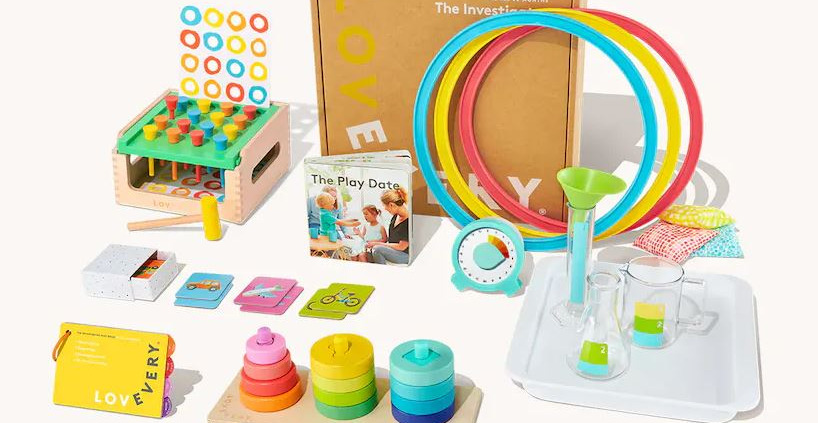
The Investigator Play Kit ➜

Activities for children ages 31-33 months.  Your toddler is working on their emerging executive function skills, which are important for everything from controlling one’s behavior to planning a future task, and even creativity. This Play Kit will support their natural curiosity.  Practice jumping, balancing, and tossing.  Build concentration, language, and memory skills.  Strengthen gross motor skills.  Learn lessons in liquid conservation.
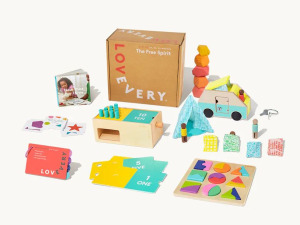

The Free Spirit Play Kit ➜

Activities for children ages 34-36 months.  Your child is almost three years-old! Age three is sometimes called “the magic year,” a time when language blossoms, independence and curiosity grow, and social-emotional skills start to sharpen. Embark on this special stage together with play essentials to support their growing skillset.  Fit shapes and contrasting colors together.  Early exposure to numeracy.  Practice problem-solving and balancing skills.  Engage in imaginative play.  Build real-life skills.

The Observer Play Kit ➜

Activities for children ages 37-39 months.  Welcome your new three-year-old to the “Year of the Self” as they take ownership of their routines, build emotional intelligence, and make sense of their world through open-ended play.  Explore routines with pretend play.  Practice nesting with early exposure to architecture concepts.  Set expectations by planning their day. Encourage independence and self care.


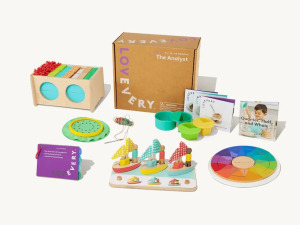
The Analyst Play Kit ➜

Activities for children ages 46-48 months.  Challenge your (almost) four-year-old to use precise fine motor skills, solve new sensory and STEM puzzles, and cook with fractions—all with fun, hands-on play.  Practice matching objects through sensory play.  Build descriptive language skills.  Solve a color puzzle using different shades.  Put fine motor skills to practical use.  Translate 2D pictures into 3D objects.  Visualize parts of a whole.
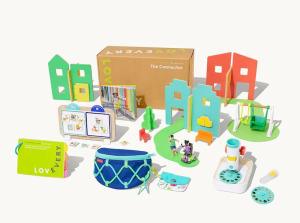

The Connector Play Kit ➜

Activities for children ages 49-51 months.  Support flexible thinking with playthings that help your child think differently and make new connections as they learn to investigate, solve problems, and adapt to change.  Practice flexible thinking.  Investigate objects from different perspectives.  Build independence and routines.  Strengthen precise fine motor skills.  Create, adapt, and act out new stories.


Library of Things kits can be checked out for 21 days using your library card. Kits must be checked out and returned to the L.E. Phillips Memorial Public Library Customer Services desk. Library of Things kits accrue fines of $1 a day if returned after the checkout period.

Library Life Hack: Use the event calendar to remind you of upcoming programs!

The library is a great place to gather with friends and family, and take part in a wide-range of exciting programs. From storytime to Lego Club to BINGO and more, there is always something fun to do. You can find our full line-up on the library’s Event Calendar.

One of my favorite features on the Event Calendar is the “Remind Me” icon. Just click on this icon and enter your email to receive a reminder 24 hours before the program!


Some programs do require registration. For these, you will receive automated reminders after you complete the registration on the Event Calendar.

See you at the library!

Meet the Parenting Collection

Parents and caregivers, let me introduce you to Youth Services’ parenting collection!

Launched at the end of 2019, this collection contains materials for both children and adults on a range of family topics. You’ll find picture books for children about welcoming a new baby, potty training, adoption, divorce, and managing emotions. You’ll also find informational books for parents and caregivers of children ages 0-8 that focus on four main categories:

Click on the links above to see book suggestions in each of those categories.

Browse the whole parenting collection online or in person. Find our library hours here.

Great Books for New Readers

One of the most common questions I get from parents in the library is how to help their child learn to read.

The first answer is that reading out loud to your child early and often is the number one way to help them become a good reader. Not only do they learn many pre-reading skills by watching you read aloud, but they also very importantly learn the love of reading from you. For more early literacy tips, check out these recent blogs from Jerissa. TalkReadSingPlay

When my own son was learning to read, he started by pre-reading books like “Great Day for Up,” where he gleefully picked out every occurrence of the word “up” and read it to me as I read the story. He also loved “reading” the book “Bears on Wheels” back to me, reading the pictures and telling me the story as he went.

When he was ready to start really reading and decoding the words on the page, he started with the Bob Books from the library. These super short books with just a few words per page really helped build his confidence as well as his reading ability. He loved when he could declare that he read a whole book by himself!

I have compiled a list of great books to help get your child started on their reading journey. These books range from those with one or two words per page to some with easy sentences. I hope that these books can help start your child on their lifelong love of reading!

Building Brains by Playing with Your Children

Parents, did you realize that children develop essential skills that help them learn how to read long before formal reading instruction begins? These are called early literacy skills, and they include vocabulary, print motivation, phonological awareness, print awareness, letter knowledge, and narrative skills.

How do children gain these skills, exactly? The answer is simple. Through everyday nurturing interactions with you! When you talk, read, sing, and play with your children, you are helping them build these foundational skills, and you’re strengthening your bond with your child in the process. Win, win!

*This is the fourth post in a series of blogs about utilizing the early literacy practices (talk, read, sing, play) to foster your child’s development. This entry focuses on the practice of playing.

“Play is often talked about as if it were a relief from serious learning. But for children, play is serious learning.” –Fred Rogers

Research has consistently shown the positive impacts of play on child development. Through play, children practice and develop social skills, language skills, cognitive skills, and motor skills.

Play takes many forms and evolves throughout a child’s early years. Exploring their surroundings, building with blocks, creating art or music, dancing, and pretending are just a handful of the myriad ways in which young children play.

If you’re like the average parent, time and energy are precious commodities. Rest assured that setting aside just a few minutes a day to play with your child will strengthen your relationship and yield benefits that extend far beyond the years they’re interested in pretending you’re a dinosaur.

Make the most of playtime with these tips:

  • Let your child take the lead.
  • Make observations (“You built a structure with 7 blocks.”).
  • Ask open-ended questions (“What are you making?”).
  • Pose challenges (“I wonder what would happen if…”).
  • Focus your praise on their effort, rather than the outcome. This is key to developing a growth mindset.
  • Set up invitations to play by arranging a few enticing materials in a play space for your child to discover.
  • Add variety. Take it outside, add movement, create art, make a sensory bin, read a book and pretend to be the characters afterward, etc.

Want some fresh ideas for playful activities to enjoy with your young child? Check out this list of books from our parenting collection that will inspire YOU to ask your child, “Wanna play with me?”

Building Brains by Singing with Your Children

Parents, did you realize that children develop essential skills that help them learn how to read long before formal reading instruction begins? These are called early literacy skills, and they include vocabulary, print motivation, phonological awareness, print awareness, letter knowledge, and narrative skills.

How do children gain these skills, exactly? The answer is simple. Through everyday nurturing interactions with you! When you talk, read, sing, and play with your children, you are helping them build these foundational skills, and you’re strengthening your bond with your child in the process. Win, win!

*This is the third post in a series of blogs about utilizing the early literacy practices (talk, read, sing, play) to foster your child’s development. This entry focuses on the practice of singing.

No musical training? No worries! It is your voice that soothes and comforts your child, describes the world to your child, lets your child know they are loved. Rest assured, your singing voice can do all of that, too. The benefits of singing and engaging your child in musical experiences extend across all domains of development, including the following:

Language/Literacy

  • Singing fosters phonological awareness, the ability to hear and manipulate units of sound.
  • It reinforces and develops vocabulary, especially if unfamiliar words are explained.

Social/Emotional

  • Singing to or with your child is a positive and nurturing interaction that strengthens your bond.
  • It can ease transitions between activities and help a less desirable activity be more fun.
  • It can calm a fussy baby or toddler (and a hardworking parent).

Cognitive

  • Singing and related musical activities promote the development of crucial executive functioning skills. These skills are deemed essential for school readiness and include a child’s ability to focus attention, utilize working memory, and exercise self-control. Learn how to use music and other everyday activities to foster these skills in your child from Harvard’s Center on the Developing Child.

Physical

  • Young children strengthen muscles and develop gross motor skills as they move to music.
  • Young children develop fine motor skills when they practice fingerplays (e.g., Itsy Bitsy Spider, Where Is Thumbkin, etc.).

Tips

Add more music to your family’s routine by trying one or more of the following activities:

  • Make up a lullaby for your child. Find inspiration with the endearing Carnegie Hall Lullaby Project.
  • Insert your child’s name into familiar tunes, like “Old [Mateo] Had a Farm.”
  • Share fingerplays and action rhymes with your child. Check out the library’s Fingerplay Fun videos to expand your repertoire.
  • Make a shaker, like these. Or these!
  • Make a drum set with pots, pans, food storage containers, and wooden spoons for mallets.
  • Make a playful craft microphone for you and your child, and put on a show.
  • Plan a family dance party or a family lip syncing contest.
  • Read musical books! View a handy dandy musical book list here.
  • Read nursery rhymes! View a handy dandy nursery rhyme book list here.

Enjoy singing and engaging in other musical experiences with your child! Find information and tips about the other early literacy practices here: talking, reading, and playing.

Additional Resources 

Baby Music: The Soundtrack to Your Child’s Development

A resource from UNICEF on how making music, not just listening to it, impacts child development. Includes a link to a related Mini Parenting Masterclass (5 minutes).

Beyond Twinkle, Twinkle Little Star

An article from NAEYC and Zero to Three on how music supports each domain of development and what early childhood professionals can do to enhance early learning experiences with music.

Dance Party with Freegal!

There is nothing quite like dancing and singing with your little ones.

If you are anything like me, you are always on the hunt for fun, appropriate, kid friendly tunes. The L.E. Phillips Memorial Public Library is here to help with your music needs! If you want free unlimited music streaming and free downloads of music/music videos you can keep, then you want to try Freegal. Eau Claire cardholders receive five downloads per week.

There are so many apps these days that it can get confusing to wade through them all. One of the best things about Freegal is how easy it is to set up and use.

How to Get Started

Download the Freegal App (from Google Play or Apple Store) or go to the Freegal website.

Mobile Device

  • Enter your zip code, city or county and select “continue.”
  • Select “L.E. Phillips Memorial Public Library.”
  • Enter your library card number and last name.

Desktop

  • Click the “Log In” button on the top right portion of your screen.
  • Enter your library card number, last name, and email address.

For Everyone: Find Music

  • Use the search menu to look up artists you enjoy. To limit your search to children’s music, use the “browse” feature. Limit your search to “genre” and select “childrens.”

Download, stream, and enjoy the music!


Book Clubs (Grades K–2)

Building Brains by Reading with Your Children

Parents, did you realize that children develop essential skills that help them learn how to read long before formal reading instruction begins? These are called early literacy skills, and they include vocabulary, print motivation, phonological awareness, print awareness, letter knowledge, and narrative skills.

How do children gain these skills, exactly? The answer is simple. Through everyday nurturing interactions with you! When you talk, read, sing, and play with your children, you are helping them build these foundational skills, and you’re strengthening your bond with your child in the process. Win, win!

*This is the second post in a series of blogs about utilizing the early literacy practices (talk, read, sing, play) to foster your child’s development. This entry focuses on the practice of reading.

In “Becoming a Nation of Readers,” a landmark 1985 report, experts declared that “the single most important activity for building the knowledge required for eventual success in reading is reading aloud to children.” The positive effects of regularly reading aloud to your children are numerous and include the following:

  • builds connections in their brain
  • develops their language and vocabulary skills
  • supports their social/emotional development
  • strengthens their relationship with you
  • teaches them about themselves and the world in which they live

There is simply no denying the incredible and dynamic power of reading aloud to your children.

But with so many books and so little time, where does a parent begin? A great answer to this question is only three words long: your public library. Library staff is knowledgeable about the collections and eager to help your kiddos find books that match their interests and abilities. Reach out to us by phone (715-839-5007) or email (ysstaff@eauclaire.lib.wi.us) to start a conversation.

In the meantime, check out our staff curated book lists on a variety of topics for a variety of readers on our website and on our Bibliocommons profile. You’ll find great books to share with babies, toddler-tough picture books, funny stories, books for dinosaur fans, not your average lift-the-flap interactive stories, and so much more.

Okay, I’ve got some great books. Now what?

The greatest benefits from reading aloud can be achieved when you and your child are engaged in the reading experience. Enhance your child’s engagement and your own enjoyment by utilizing these tips:

  1. Read with expression! This may take some practice, but your kids will love it! 100% money back guarantee! Here are some vocal contrasts to add expressive flair:
    • Play with your pitch. Experiment with using a high voice and low voice to add depth to a character.
    • Adjust your volume. Perhaps you’ve reached a suspenseful part of the story and want to speak quietly for dramatic effect. Perhaps a character is surprised and speaks at an elevated volume.
    • Consider your speed. Avoid rushing. Relish each word. Make use of pauses and silence. Read quickly only when the action of the story calls for it. In general, a slower rate of speed gives your child more time to process what they are hearing and seeing on the page.
    • Experiment with your tone. Play around with the quality of sounds your voice can make. Gravelly, airy, nasal, etc.
  2. Be interactive! Invite your child to actively participate in the read aloud experience by doing the following:
    • Discuss the cover art and illustrations. Remember, while you focus on the text, your child is “reading” and deriving meaning from the illustrations. Talk with your child about the art and how it relates to the story.
    • Ask open ended questions. These enable a child to demonstrate their understanding and practice their narrative skills. Here are some examples:
      • What do you notice? They may observe something you haven’t yet noticed.
      • Why do you think he feels sad? This can help build emotional intelligence.
      • What do you think is going to happen? This is an opportunity to use critical thinking skills.
    • Include your children by inviting them to:
      • Do the actions. Many picture books include bold actions. Don’t just read it, do it!
      • “Read” the repeated phrases. Your child will quickly learn any repeated refrains in a story. After two or three times, start the phrase and let your child finish it.
      • Finish the sentence in a familiar text. Likewise, your child’s favorite books will soon be memorized. Invite them to finish the sentence or even “read” the book to you.
      • Complete the rhyme. Rhyming books are great for developing phonological awareness—an early literacy skill. Start the rhyme, but pause at the end to see if your child can finish it.
    • Discuss the book afterward. What did your child like? Dislike? What was their favorite part? What do they think the characters will do next?

Reading aloud with your children every day is beneficial for their development and can be both joyful and rewarding for you and your child. For more information and ideas on this topic, check out these great additional resources:

Enjoy reading with your child! Find information and tips about the other early literacy practices here: talking, singing, and playing.