

How to ACTUALLY Relax With Meditation
Everyone has days where nothing seems to go quite right: the yolk on your egg broke, the water heater gave you a cold shower, and you dropped your mug of coffee on the way out of the house. Not only that, but you forgot you needed to put gas in the car, hit every red light possible on your way to work, and realize that you left your lunch sitting on your kitchen counter.
Once you finally do make it to work, you’re already at your tipping point, ready to boil over and take your frustration out on the first person who dares to even smile at you. However, instead of fantasizing about throwing a chair out the window, there is a much more helpful tool you can learn to help process those frustrations and move on to having a better day: meditation!
First, what is meditation and why should I do it?
Traditionally, meditation was a practice associated with many eastern religions (from Buddhism to Islam, and eventually even Christianity in some parts of the world!) as a way to achieve heightened mental clarity and peace of mind. As time has gone on, the definition of meditation has broadened a lot, to the point that many might argue there is no “true” definition or necessary religious connotation anymore. Regardless of the definition, meditation can still be a helpful tool for anyone, as it actually can help one gain more mental clarity and peace of mind. In the short term, it can be a great way to let go of some negative experiences and emotions from the day and to begin feeling better. In the long term, it can help one stay calmer, less stressed, and have an easier time not feeling like your whole day is ruined when negative situations do inevitably happen.
Second, how can I meditate?
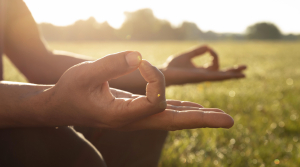
The easiest way to meditate is to find a comfortable sitting position somewhere quiet, ideally with your chest upright for deep and consistent breaths. Once you then close your eyes, the goal is to allow your thoughts to cross your mind without acknowledging them; this will take practice and patience. Many people will do this by focusing on their breathing, picturing a peaceful scene, and/or repeating a mantra (it can be something as simple as “breathe”, “calm”, or even “ommmmm”). You can do this for as long or as short as you feel it will benefit you, but it can be as quick as five minutes or less, which is ideal for those early mornings when you can’t seem to catch a break.

While it may seem contrary to the idea of processing your emotions and moving through your frustrations, the goal of meditation is essentially to ignore all of the thoughts in your head while you meditate. The idea is that the thoughts themselves aren’t what cause the frustration, but it’s our reactions to those thoughts that cause it. It’s easy when a frustrating situation occurs to subconsciously respond quickly and emotionally, rather than calmly letting the situation pass and letting the emotion go. This is especially true once you have multiple negative experiences that you mull over all day (not only did THIS happen, but so did this, and this, etc.) and think about negatively again every time another stressor, big or little, pops up. By letting those thoughts pass by without a negative response, it makes it a lot easier to stop building up those negative emotions throughout the day. A “bad” day shouldn’t have to be defined by what is quite literally just a bad few moments.
It’s also worth noting that the goal of meditation is not to remove all of your emotions and never feel negativity in your life – although that may sound ideal at times. Negativity is an inevitable part of life, but meditation can help keep that negativity to a minimum and avoid having that negativity stack over time. The better you are at controlling your emotional responses to stressful situations, the better you will be at staying calm and collected during those days where nothing seems to go right. After all, at the end of the day, do you really still want to be upset over your broken egg yolk?
If meditation seems like something that might be of interest to you, I encourage you to give it a try the next couple times you’re experiencing negative emotions and see if it benefits you (keep in mind, it may take a few tries before you recognize any benefits and understand how to best use it in your life). If you’d like to learn more about meditation and other ways to use it to your benefit, consider checking out the curated list of books below or taking a look at one of our online resources, LinkedIn Learning! While LinkedIn Learning is a great place to find helpful lessons on workplace skills and professional development, it can also be a great resource for general life skills such as meditation. Once you create an account using your library card number and your library pin number, you’re free to use all of the different resources on the website, including this collection on Mindfulness and Meditation.



Add a Comment
Now we'd like to hear your thoughts! Comments and suggestions are welcome!