

Staying Safe in Storm Season
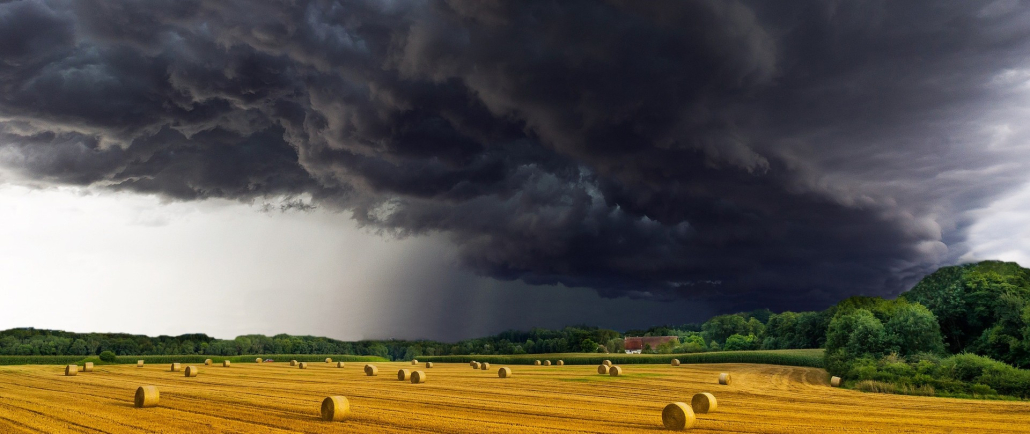
A blotch of angry red on the radar. A grumble from the dark clouds. The eerie wail of a warning siren.
What next? Is your garbage can going to be knocked over, or is a tornado going to turn your house to splinters?
Wisconsin isn’t usually considered part of Tornado Alley, but we’re no strangers to storms. There have been over 1,500 documented tornadoes in the state since 1844, killing 511 people and injuring at least 3,056. Wisconsin gets around 23 tornadoes a year, with most occurring between April and August. Historically, the state’s worst tornadoes have happened in June and July. The year with the most tornadoes in Wisconsin was 2005, with 62 tornadoes, and the year with the least in the state was 1952, with only one twister. However, one storm can be all it takes to change landscapes and lives forever. April 8-12, 2025 is Severe Weather Awareness Week in the Badger State, so this is the perfect time to brush up on your weather knowledge and safety plans.
- Stay informed as conditions change. Local television stations will interrupt programming if there’s a warning in the area, and will often have words and/or maps at the bottom of the screen to update the public, as well. There are many weather apps you can download that will alert you when a watch or warning has been issued. A more low tech but still reliable option is to have a weather radio set up during storm season. You can also follow social media for local, regional, and national weather services.
- Understand the difference between the various alerts issued by the National Weather Service. They have a nice summary here, but the short version is that a “watch” means to keep watching the weather conditions, because there’s a decent chance storms may happen. A “warning” means the storm is already happening and it’s time to take shelter. Don’t be fooled if the winds don’t come up immediately after the sirens sound. As technology has improved, so have the warning times. Although twisters may still spin up with little advance notice, it’s not unusual to get more than ten minutes’ lead time. Use that extra time to get to the safest place you can.
- Know what county you live in, and preferably what part of it. If a tornado warning says the storm is moving into, say, southwestern Chippewa County, you’ll want to know if that’s about to pass over your house! If you live in the city of Eau Claire, you’re mostly likely in Eau Claire County or, if you’re near the airport, you might be in Chippewa County. Not sure? The U.S. Census Bureau has a handy tool to tell you more than you ever wanted to know about your home. Enter your address on this site (ignore the “Benchmark” and “Vintage” fields), and hit “Get Results.” There will be a lot of extra, irrelevant information, but keep scrolling down to the “Counties” section and it will tell you which one you live in.
- Have a plan. If the sirens sound in Eau Claire, it means we are under either a Severe Thunderstorm Warning or a Tornado Warning. (Officials may also test the sirens at 11:00 A.M. on the first Monday of the month.) Either kind of warning means you need to take shelter. The best place is on the lowest level of a building (i.e. the basement, if there is one), away from windows, and with as many walls between you and the outside as possible. Avoid large, open spaces like auditoriums that can easily collapse, and seek out a smaller, interior room like a bathroom. Staying in a mobile home, boat, or vehicle is never safe in a tornado. Despite the impression given from some viral videos from years past, it’s also unsafe to shelter under a highway overpass due to the narrow space acting as a wind tunnel. If you’re out in the open with truly no other option, get to a low place, such as a ditch or gulley, to hopefully stay below the level of flying debris.
- Keep supplies on hand. Have a stash of batteries, bottled water, a change of clothes, flashlights, nonperishable food you can open and prepare without electricity, a first aid kit, medications, and whatever you might need if the power is out for an extended period of time. Charge your phone and other devices before the storm, just in case. Have the information you need to contact your insurance company if your property is damaged, and consider taking pictures to serve as “before” images.
Severe weather can be scary, but knowing what to expect and having a plan ready to go can help reduce storm anxiety and keep you and your loved ones safe. We’re lucky to live in a time when advance warning is possible and the latest information is at our fingertips. Stay aware, and stay safe!

Extra Tornado Facts for the Curious
Tornadoes are ranked on a scale of zero to five, depending on how much damage they do. This is determined after the fact by surveys conducted by the National Weather Service. The original ranking system, the Fujita Scale, was later revised into the Enhanced Fujita Scale, which is why you’ll see older tornadoes called F3 and ones from 2007 onward labeled EF3. On both scales, zero is the weakest tornado and five is the worst of the worst. There have only been six tornadoes of F5/EF5 strength in Wisconsin in records going back to the 1880s. These include the storm that devastated Colfax in June 1958, and the deadliest storm in state history, which leveled New Richmond in June 1899, killing 117 and injuring 125.
Dunn and Eau Claire Counties suffered significant damage from a tornado on June 13th, 1930. Among the hardest-hit parts of Eau Claire was the area now occupied by the Eau Claire Children’s Theater and the Brewing Projekt. Perhaps the most famous storm to strike Eau Claire was on July 15th, 1980, when a combination of several tornadoes and a derecho (also known as “straight line winds”) swept across western Wisconsin and downed a huge number of trees, knocked out power for many days, and took three lives. Here is an interactive map of tornadoes that have touched down in Wisconsin since 1950.
Did you know there’s an alert even worse than a tornado warning? Thankfully the Chippewa Valley has never been under the even more dire category of “Tornado Emergency.” Since 1999, the National Weather Service has used this designation when a confirmed, strong tornado is moving through a populated area, and there is a high risk of fatalities. The only time one has been issued for Wisconsin was for Washburn and Burnett Counties on June 17, 2010. That storm ended up producing an EF2 tornado that injured two people but thankfully did not take any lives.


Add a Comment
Now we'd like to hear your thoughts! Comments and suggestions are welcome!