

French Heritage in the Chippewa Valley
As I mentioned in my previous blog post, I immigrated to the United States from France a few years ago. Even if I chose to leave, there are still some things that I miss from there. So, for me, reading French names here and there, or seeing French culture celebrated, warms my heart. Finding connections with my home country and culture brings a sense of familiarity that is welcome and satisfying, as I’m sure a lot of you can relate to.
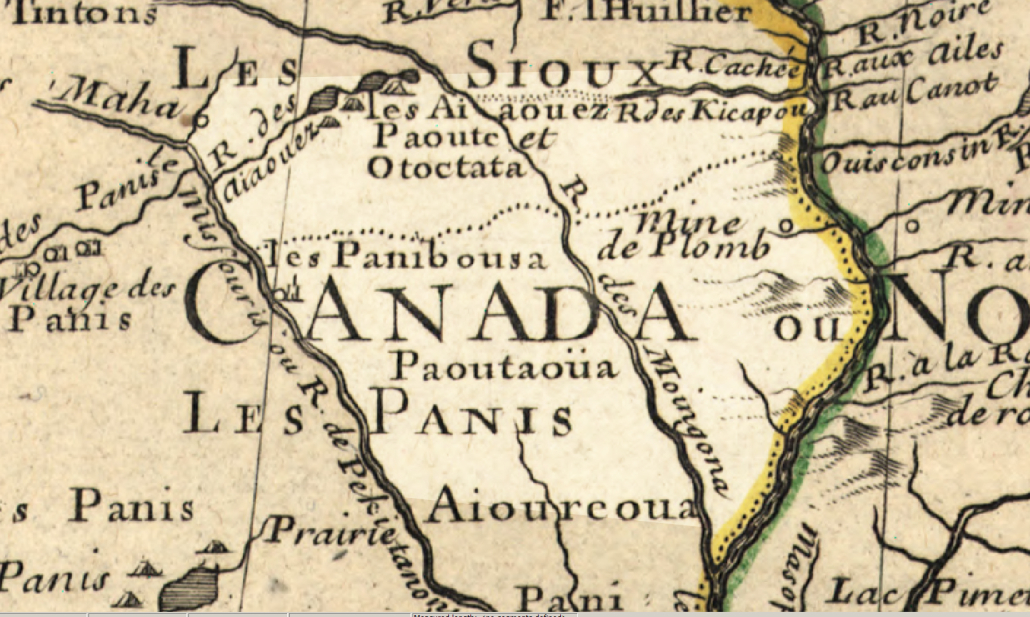
And I’ve come to find out that Wisconsin and, in particular, this region’s history have strong ties to France and French-speaking cultures. Although French immigration to the region has been minor (the majority was German and Norwegian in the 1860s), French and French-Canadians were among the first European settlers to arrive in the area in the 1600s. Until 1673 and the events of the French and Indian War, Wisconsin was actually part of the territory claimed by the French as New France. This early French presence had a lasting impact on names and on the map of Wisconsin. Moreover, the first mapmakers of the state were French. The name “Meskousing” was first written in 1673 when Jacques Marquette and Louis Joliet came to the area and printed the Indian word with French spelling, later misspelled by another French explorer as “Ouisconsin”, which remained for more than a hundred years before the contemporary spelling was adopted.
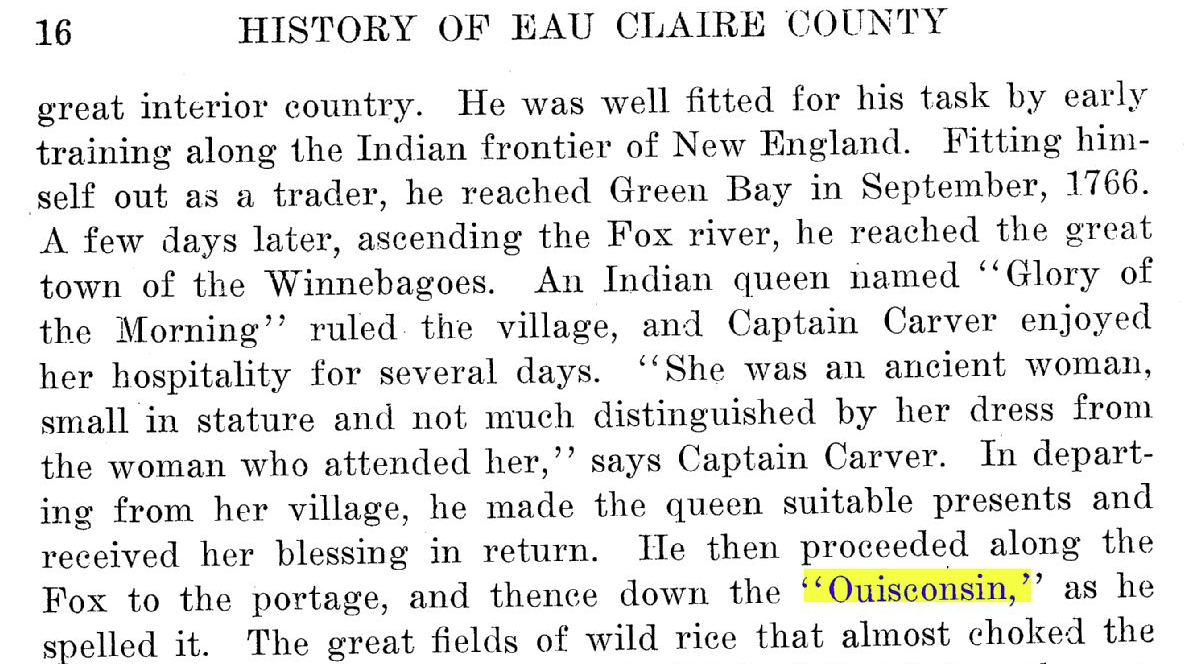
click image to enlarge
Regarding the name “Eau Claire”, legend has it that when English traveler Jonathan Carver paddled up the Chippewa River in 1767 and saw how much clearer the Eau Claire river was at the confluence of the two, one of his French crewmen proclaimed, “Voici, l’eau claire!” — “Here comes the clear water!” That’s where the name supposedly comes from (although there are many references of the English translation “Clear Water” being used for the city before the French name was officially adopted). It’s likely that the name was actually translated from a phrase the Ojibwe people, original inhabitants in the region, used to call the river, “Wah-yaw-con-ut-ta-gua-yaw-Sebe,” which means “The water of the river is clear.”
Many other names in the area are of French origin: Eau Galle (derived from the name “la rivière au galet” or “the river of the gravel bank”), Cadott (named after Michel Cadotte, a French-Canadian fur trader), Brunet Island (named after French-American trader Jean Brunet who founded Chippewa Falls), Lac Courte Oreilles, Pepin (named after 17th-century French-Canadian explorers, brothers Pierre and Jean Pepin); and further away: Fond du Lac, Prairie du Chien, Presque Isle, Lac du Flambeau, St Germain (named after 17th-century French soldier and fur trader Jean Francois St. Germaine), etc. As you can see, this French heritage is deeply rooted in the fur trade, as well as the lumber trade, that contributed to the region’s economy. Eau Claire was part of, and shaped by, this large network of French and French-Canadian explorers and traders. At the end of the 18th century, two of them, LeDuc and Penasha, established operations here and French fur traders continued to spend winters in the area in the first half of the 19th century, before the first permanent settlers arrived. In 1895, about one-third of the Eau Claire population was foreign-born.
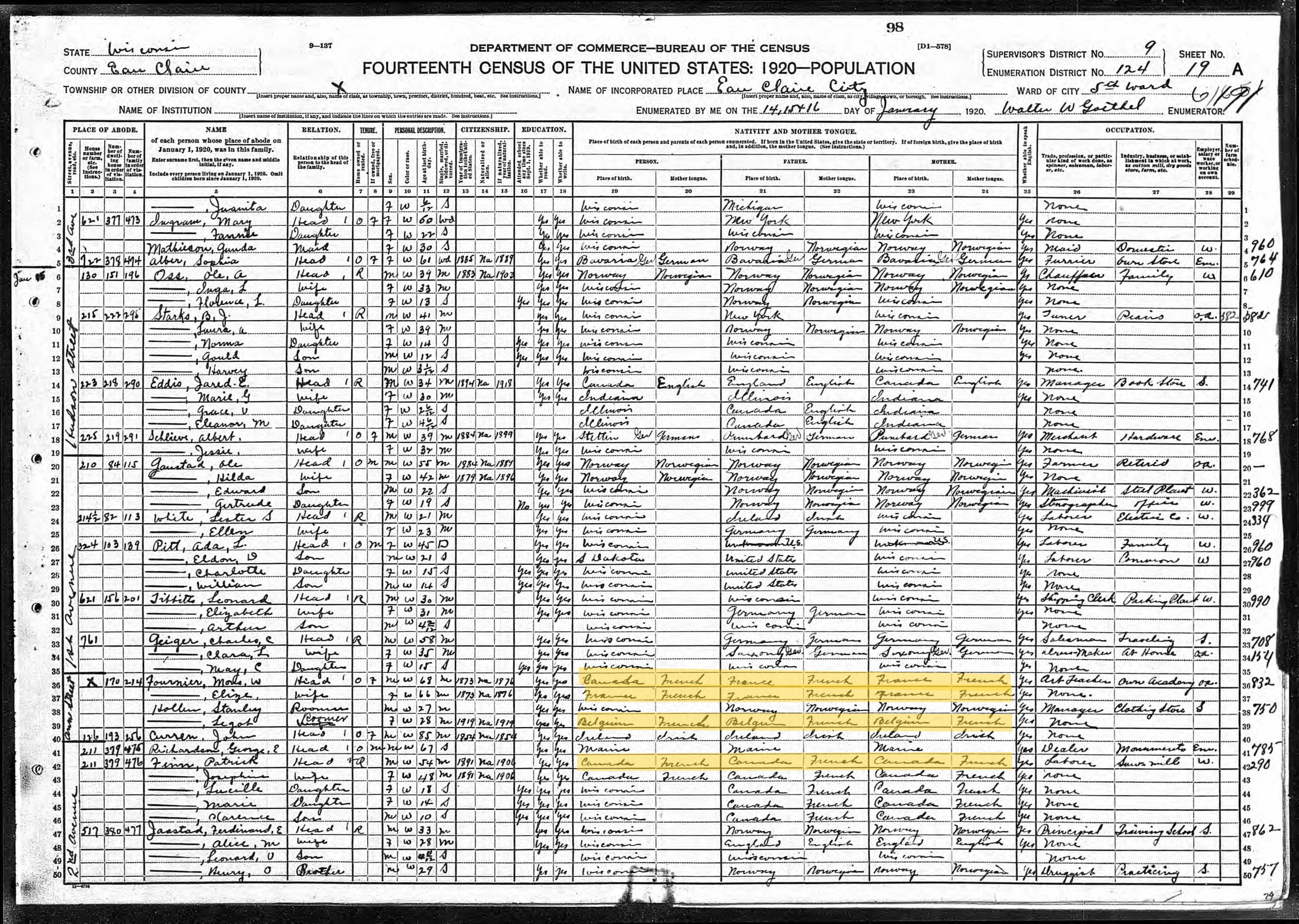
click image to enlarge
Therefore, there is a fair chance that one of your ancestors was of French or French-Canadian origin. If you are burning with curiosity to find out, great! The library offers genealogy tools like Ancestry, Family Search or Heritage Quest that you can use to explore your family history and heritage for free, which among other things lets you view Federal Censuses that contain precious information like birthplace or language spoken (see an example above). If you would like to further explore this French influence on the history of the Chippewa Valley and Wisconsin, you can check out some of the resources offered by the library like the ResCarta collections of city directories, historical photos, statistical reports, and more. You can do a simple search in the content of the collections by typing “French” and see what comes up!
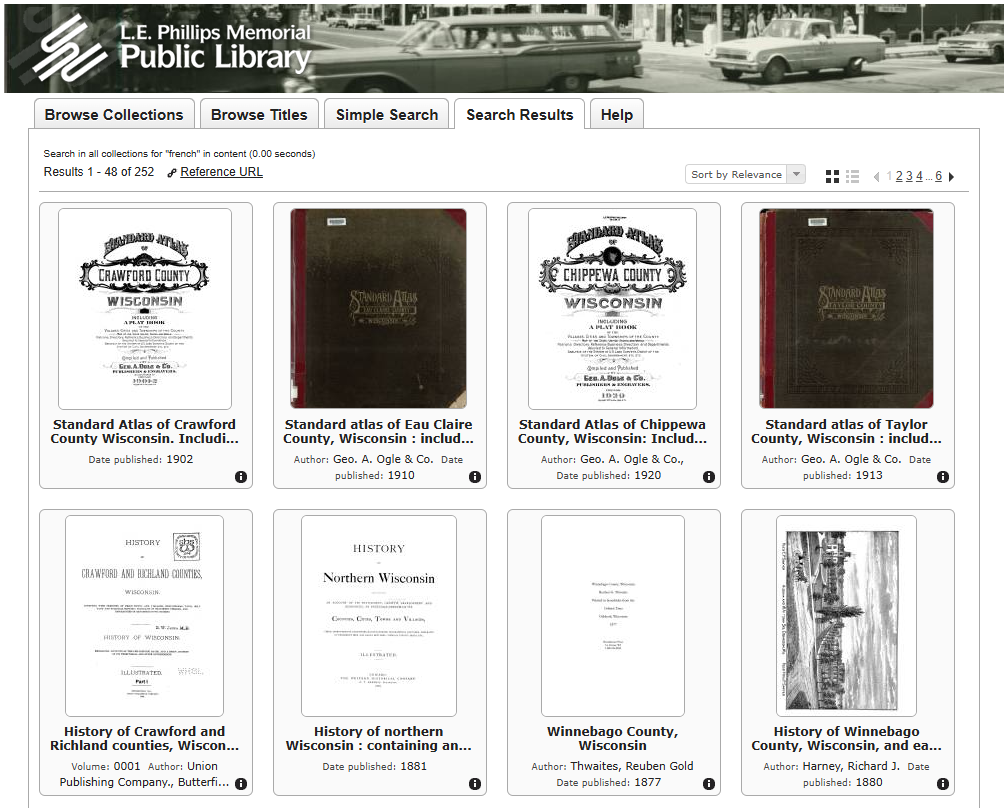
click image to enlarge
Today, there is a growing French-speaking immigrant population in Wisconsin, and in Eau Claire the French-speaking community is small but active. The language has had a presence in the state for hundreds of years and is the second most taught language in schools, which is why it had to be represented in the Eau Claire library’s Community Languages collection. If you would like to read more about French heritage and history in the area, the state, and beyond, check out these titles available in the MORE catalog:

Add a Comment
Now we'd like to hear your thoughts! Comments and suggestions are welcome!