


Celebrate National Poetry Month
National Poetry Month began in April 1996, started by the Academy of American Poets to increase awareness and appreciation of poetry in the US.
There are so many genres and forms of poetry – all of them equally valid, but offering different ways to stir emotions, tickle the eardrums, or convey a message.
Some of my favorite forms of poetry to create are blackout poetry and haiku (and its cousin, tanka).
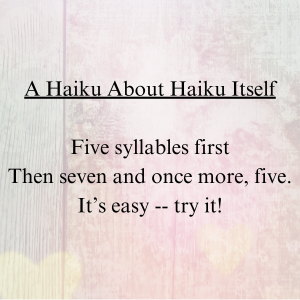
Haiku, if you are unfamiliar, is a form of Japanese poetry made of one line of five syllables, another of seven, and a third of five syllables again. Like this:
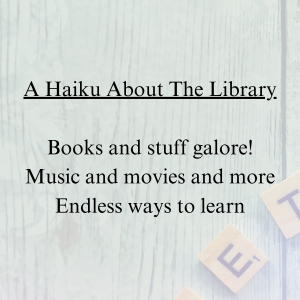
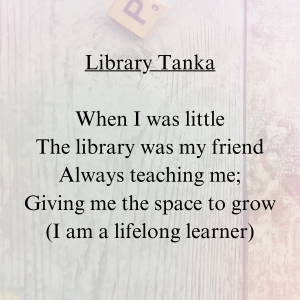
Like haiku, tanka is also Japanese poetry but has 5/7/5/7/7 syllables instead:
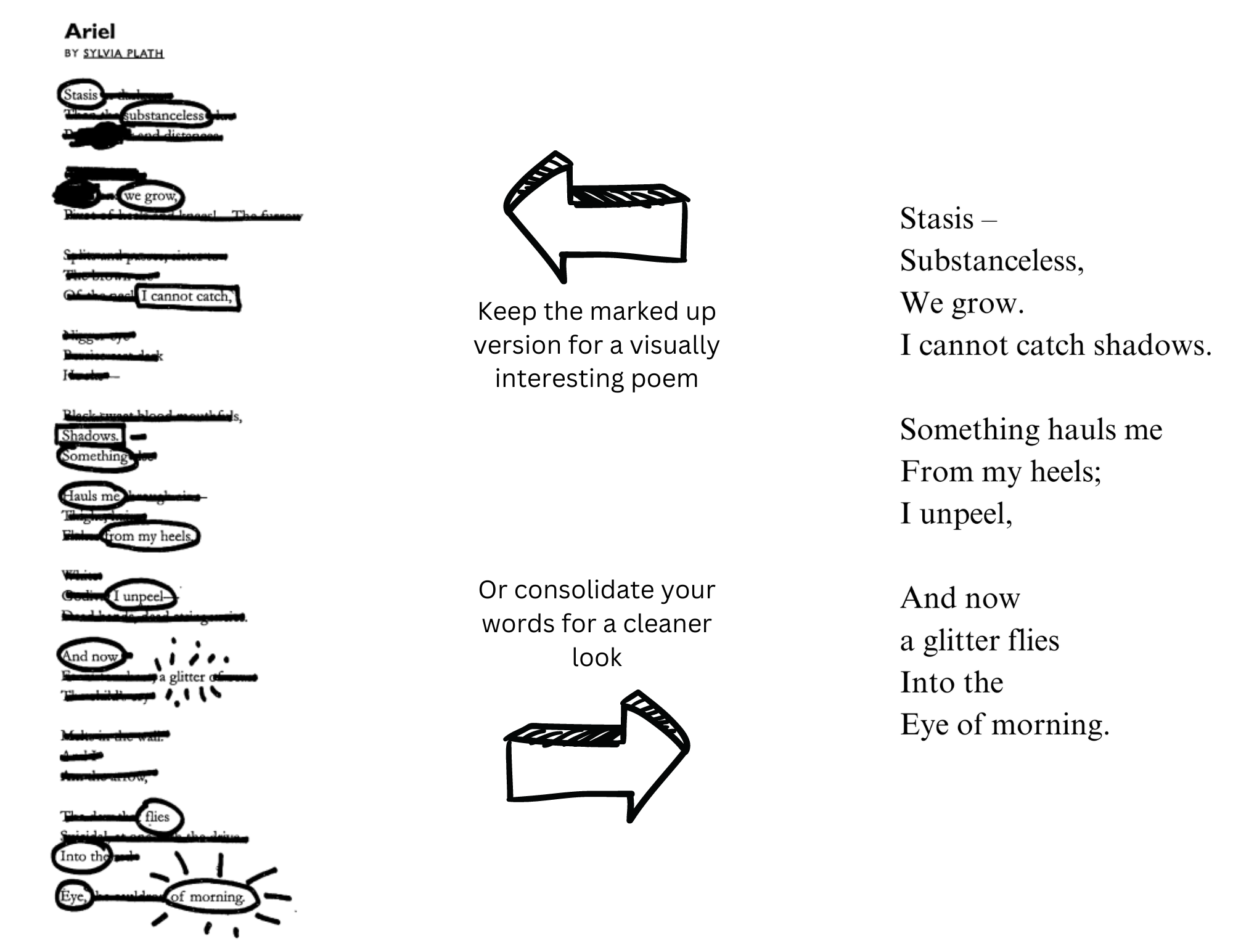
Whereas poetry forms like haiku or sonnets require the writer to use certain syllables or sounds, blackout poetry just needs an imagination and a keen eye. Once you choose a text you like, you simply black out everything but the words that grab your attention, and form a new poem with them. For example, the poem Ariel by Sylvia Plath becomes:
There are so many different ways of exploring words and ideas! But why study poetry? Why create it? Why read it?
Poet Robert Frost said:
“Poetry is when an emotion has found its thought and the thought has found words.”
Which is to say, that poetry gives readers a different set of lenses through which to view the world, different voices of experience. Poetry helps readers hone their emotional intelligence, empathy, and being in touch with and expressing their feelings.
I personally love poetry because it gives the writer new ways to express feelings, experiences, and opinions; and it gives the reader new ears to hear with – both audibly at times (such as at a poetry slam or open mic reading), and with the “ears” of their heart and emotions.
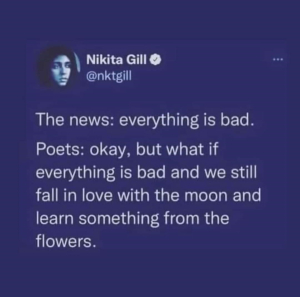
It creates opportunities for play in ways that we don’t often have access to – with sounds and sensations, and scenes in the mind. It allows us to grasp at the good in the world when sometimes it seems there is none to find.
Poets give us glimmers and glimpses of what is, from a different angle – and what could be, what is possible to imagine and create. They give us words to express the feelings we all commonly share, and all the human experiences and commonalities that make us great.
That last paragraph was poetry, believe it or not. It doesn’t have to rhyme, it’s just that some of the best ones do. All it really has to do is make you think or feel. If I’ve done that today, I guess I’m a successful poet too.
Make sure you check out our month-long poetry display and interactive magnetic poetry board next time you visit the library throughout the month of April!



Add a Comment
Now we'd like to hear your thoughts! Comments and suggestions are welcome!