
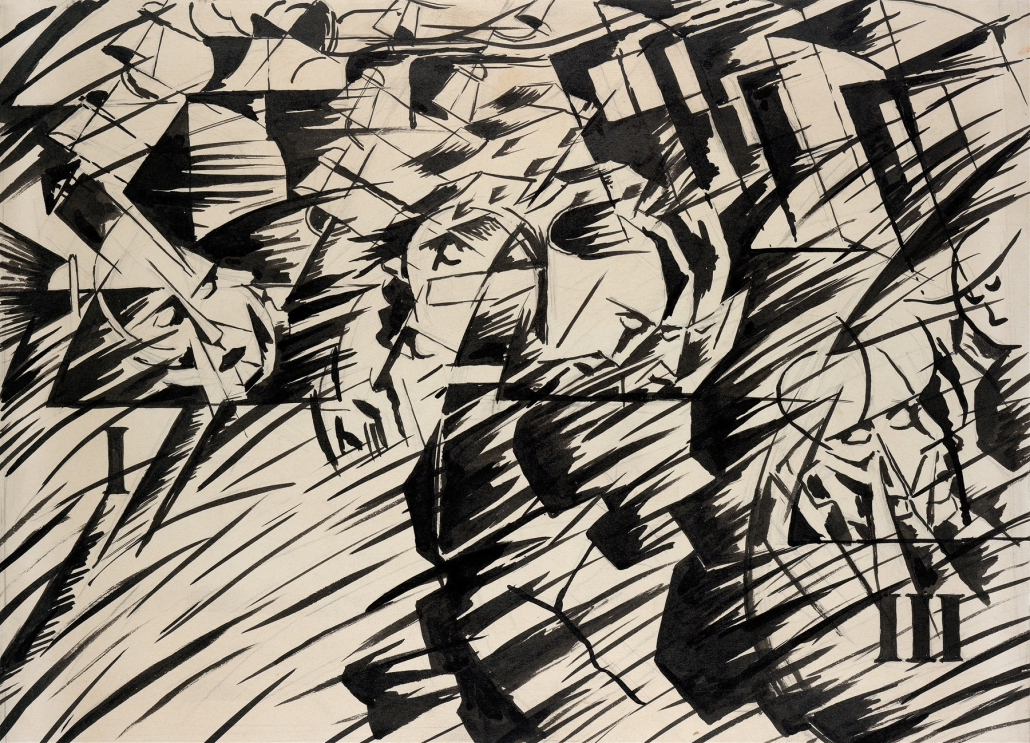

What Is Complex PTSD?
I was born anxious. I vividly remember being called a “worrywart” by my dad at a young age. And a couple years later, I came to know depression, a generational inheritance from both sides of my family. As I grew up, I heard about anxiety and depression often. They were well worn paths in the mental health field and easily identifiable to me when I experienced their symptoms. However, it was college when I came to realize part of my mental health floated outside those diagnoses.
I couldn’t remember what we learned in class, I would randomly circle test answers on my Econ 101 test. There were days I wouldn’t sleep and attend a full day of classes; my record was 36 hours awake. I would examine my relationships and realize I wasn’t connecting the way others were. And I discovered not everyone has an “airplane mode”, what I called purposely retreating into my mind when I didn’t want to be somewhere. Every morning was crushing with the knowledge I was getting up to wade through another day. This went on until March 2022, when my mental health required that I stop pushing myself.
I learned from my therapist that I fit the symptoms of Complex Post Traumatic Stress Disorder (CPTSD), a new-ish disorder just starting to be really understood by mental health professionals. New enough, insurance companies that use the Dialogistic and Statistical Manual of Mental Health Disorders (DSM) can’t accept it as a diagnosed disorder. The DSM hasn’t caught up with me apparently.
What is CPTSD?
CPTSD is multiple traumas overlapping over months or years. Trauma is defined by each individual person; everyone has a different threshold of what being traumatized means. It does mean domestic violence, trafficking, genocide, war can all cause CPTSD. However, the first few google results don’t show that poverty, emotional neglect, discrimination, etc. also can cause it. If someone felt unsafe and/or stress levels were triggered for long periods of time, it results in disorganization of all systems.
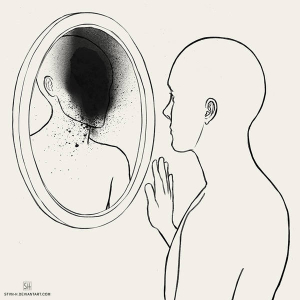
bpd: depersonalization by Steven Herber. www.deviantart.com/stvn-h/art/bpd-depersonalization-710243269
CPTSD mirrors other disorders like borderline personality disorder (BPD) and attention deficit hyperactivity disorder (ADHD). And it shares symptoms with its shorter name Post Traumatic Stress Disorder (PTSD). Both PTSD & CPTSD disorders can cause flashbacks/nightmares, hypervigilance, and avoidance of reminders of the event(s). However, people with CPTSD have additional symptoms including; trouble emotional regulating, trouble maintaining relationships, and trouble identifying and defining their sense of self.
CPTSD has been best described to me as trauma stemming from interpersonal relationships, which we see reflected in CPTSD symptomology. Alongside that disconnect from vital relationships is a disconnect from one-self. Which can result in dissociation. Dissociation is a disconnect from yourself or the reality around you. There can be a blurred sense of yourself or reality and a loss of memory. Making it harder to track symptoms or remember events that caused symptoms. Everyone experiences dissociation, usually doing repetitive tasks, like driving home and not remembering how you got there. However, CPTSD-er’s experience dissociation to distance from overwhelming emotions or memories. Many of us exist, our bodies pulsing with the aftereffects of multiple traumas but a smile on our face.
Because we are partially (or very) detached from our original body, the one that’s hurt, we struggle to untangle who we are or were. We were busy surviving something and didn’t have time to explore all our likes, dislikes, purpose, morals, boundaries, coping skills. As a disclaimer, my CPTSD was forged in my childhood, but CPTSD doesn’t discriminate against age. During survival, you can’t get all your needs met. As adults, I imagine you can have all those developed skills but lose many in surviving traumas. Especially if they become intertwined with trauma. All this to say, part of healing is safely exploring these aspects of us.
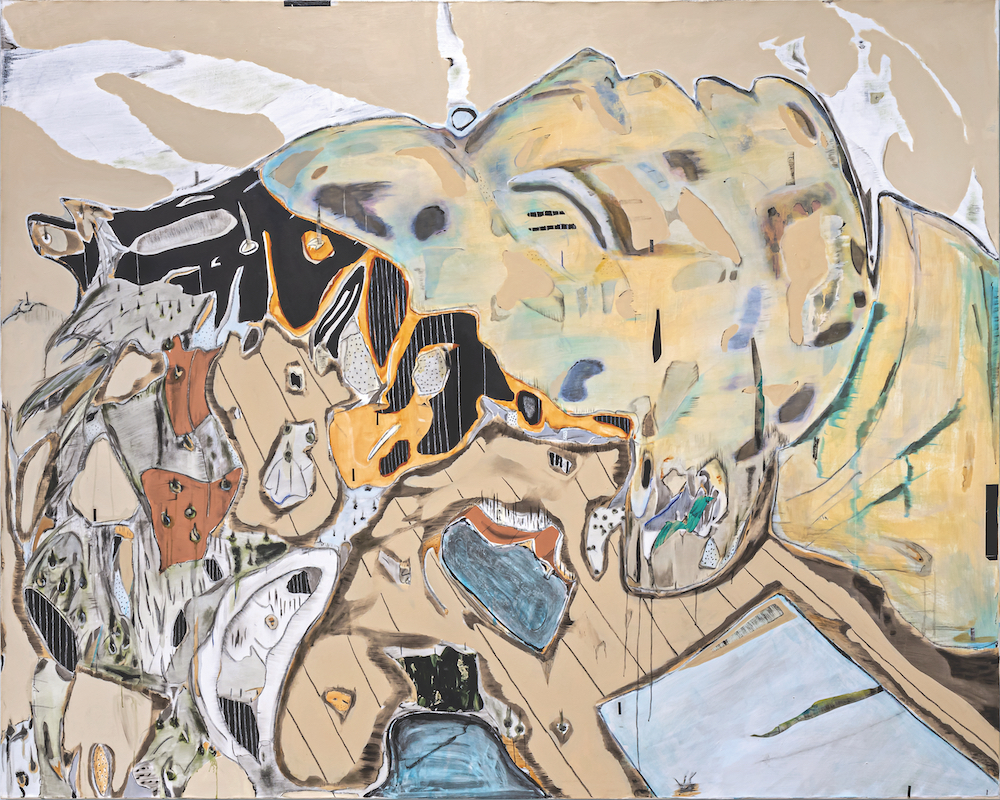
Manuel Mathieu, Zapruder/313, 2016, mixed mediums, 98 1/2 by 118 inches. Courtesy Kavi Gupta www.artnews.com/art-in-america/features/manuel-mathieu-new-talent-paintings-trauma-desire-1234592564/
Coping and Healing (with help from the library)
Healing with CPTSD is daunting. Multiple traumas mean multiple triggers, meaning multiple flashbacks, which you may or may not identify. Lack of self means a longer path back to you, the original body. That path is fogged by dissociation, a powerful coping mechanism that has kept us safe through forgetting or shielding us from our emotional memories. And our original body likely needs a safe release of the physical effects, memories our body can’t forget. Healing CPTSD is exhausting, and we’re already exhausted.
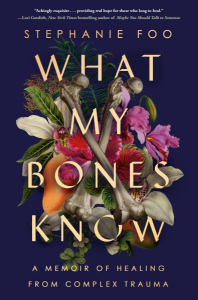 Having a trauma-informed professional guide you can be extremely helpful for healing; however, that is a privilege we don’t all attain or want to. What we can all attain, however, is library services. My favorite book so far is “What My Bones Know” by Stephanie Foo. But I find most use in our Library of Things. There are a range of kits that require low impact physical movement that help create healthy coping skills. My favorites introduce bilateral movement from my hands, quietly mirroring slow EMDR (Eye Movement Desensitization and Reprocessing) practices. Doing so releases stress and processes calm moments.
I use crochet or knitting personally but baking, cooking, making music, snowshoeing (in about 5 months) all introduce bilateral movement. All hobbies that you can start with our Library of Things. Outside of that type of movement, you can discover other healthy coping skills with a Fujifilm camera, karaoke machine, metal detector, puzzles, and more. And if you struggle to identify what you like, I recently found “Get a Hobby” a book with 365 different hobbies to discover.
Healthy coping skills are just a start to the self-care toolbox, which I’ve learned is supposed to have multiple things to serve the range of human emotions. So, I’ve included my library self-care toolbox, perhaps a start of new ways to care for you.
It’s hard to conclude what I have to say about CPTSD; the disorder is layered and nuanced. And so is the healing. If you do relate to the symptoms, go easy on yourself. (Of course, that’s easier said than done). You’re working on existing in this world while developing missing skills, healing past trauma, maintaining current relationships, and maintaining yourself. That work deserves grace for the space it takes.


Add a Comment
Now we'd like to hear your thoughts! Comments and suggestions are welcome!