


A Taste of Russia: Four Movies and a Cookbook (and a Little More)
It seems to me that Russia has always been a “hot topic” in the news, regardless of the year, or decade. The country has seen political turmoil, numerous cultural and scientific achievements, repression and freedom at different times, for different people, though it is no wonder, as Russia is by far the world’s largest country by size, stretching over 11 time zones!
Why do I care? The short answer is a family history that intertwines with the country’s history. My parents and grandparents were born in the former Soviet Union. They were ethnic Finns, in a then-Finnish majority region called Ingria, located between Saint Petersburg (Leningrad at the time) and Estonia. My family’s relationship with Russia and Russians: it’s complicated.
Interestingly, my parents were much better at speaking Russian than my grandparents, because Finnish was forbidden when they were in school. During my grandparents’ youth, however, there were Finnish schools, churches, newspapers, and a flourishing (multi)cultural environment in the area. During WWII both my parents’ families were evacuated from the Russian/German frontlines to Finland, to later emigrate to Sweden (where I, my siblings, and cousins were born.)
I have visited the Soviet Union/Russia three times in my life, as a child, a teenager, and an adult—each time mystified by the culture and people. I even studied Russian in high school, at first due to a somewhat childish reason: my parents would revert to Russian as a secret language in front of us kids. The last trip to Russia was in 2013 when my sister and I could finally visit the villages where my parents grew up. The area was off-limits to foreigners for several decades after the war. (Our trip is probably worth its own blog post because, given the current situation, it seems likely to have been the last trip to the geography of our roots.)
The library has a lot of materials about Russian history and politics, especially due to the increasingly volatile political situation and outright war. I decided to instead delve into the richness of Russian culture, to find some nuggets for anyone interested in experiencing Russia from afar.
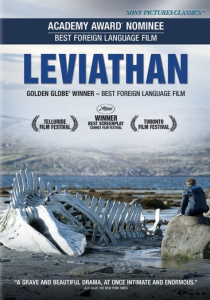 For some reason, I had missed Leviathan, when it came out in 2014. This Russian crime drama about the hotheaded car mechanic Kolya and his family was awarded a Golden Globe and was nominated for an Academy Award. Kolya gets pulled into a messy conflict with the mayor of their northern Russian coastal town over property that has been owned by his family for generations. It is a straightforward story, but there are intricate takes on big issues, such as love, friendship, money, religion; and betrayal.
Note: the movie also contains some heavily vodka-enhanced, creative cursing. Apart from the overly generous consumption of vodka and beer, other kinds of Russian culinary culture are featured in the movie: borsch* (beetroot soup,) pelmeni (dumplings), and various pickled vegetables and cured fish.
Our library system carries several Eastern European cookbooks. One of them is Kachka: A Return to Russian Cooking, written by the chefs of the restaurant of the same name in Portland,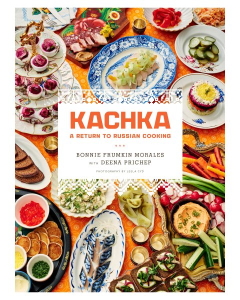 Oregon. They state that Kachka’s menu is “firmly rooted in the Soviet era, with nods even further back to both czarist excess and traditional rustic foodways.” Apart from salivating over the pictures of Short Rib Borsch, Grechka (made from buckwheat kasha, a grain similar to quinoa,) or Blinis with Roe (you can substitute expensive caviar by learning how to make cured salmon roe,) I also enjoyed reading about the food culture from various former Soviet republics and about cultural etiquette, such as “never clink glasses with your spouse (you will not have money.)”
As for fictional classics, the library offers many timeless Russian masterpieces, such as Dostoevsky’s Crime and Punishment, Tolstoy’s War and Peace, and Turgenev’s Fathers and Sons. (Come to think of it, the titles themselves seem timeless, as they could easily apply to the current political situation.)
In the Grip of Strange Thoughts: Russian Poetry in A New Era is a collection of Russian poems published after the collapse of the Soviet Union in the 1990s; some were even written much earlier, but could not be published. The styles and subject matters are varied; this is a small excerpt from a poem by Sergey Gandlevsky:
”We grew up here, and now we’ve changed/Into gloomy uncles and foolish aunts./We pined away, became a little perverted./This is our street, dear Lord… Year after year we pocket our contempt….”
Some poems in the anthology speak about faith, both spiritual and in the sense of belief in humanity, such as these words by Svetlana Kekova: “And yet all you need/is a life the size of a mustard seed,/only poverty, only compassion,/only the wine of time.”
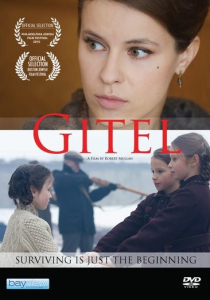 That poem made me think of one of the movies I watched for this post, Gitel. It is about survivor’s guilt and an example of the many facets of how we humans find our place in history. Gitel is a successful violinist in the city of Kuybyshev (currently Samara) in the late 1960s, but she is haunted by having witnessed the execution of her parents and sisters during WWII. The story has a gentle tone, exploring what family, love, and self-respect really mean. It is probably the first Lithuanian-produced movie I have watched, and it reveals how Russian, Lithuanian, and Jewish histories intermingle with personal identities. I also found the 1960s Soviet décor and fashion fascinating—very retro.
Gitel takes a westward trip to confront her past, while in Compartment No. 6 a young Finnish woman travels way up north, from Moscow to the city of Murmansk by the Arctic Sea. Laura seems a little stuck in life, escaping a complicated relationship in the big city. The 36-hour trip affords her plenty of time for self-reflection, as well as making acquaintances among fellow travelers, especially a hot-tempered young Russian man. This subtle little film was awarded the Grand Prix at the Cannes Film Festival. Apart from being a charming character study, I felt very much at home with Laura speaking Russian in a Finnish accent, just like my parents!
Lastly, if you really would want to go on a trip—if only visually and mentally—the movie Petrov’s Flu from 2022 will do the trick. The cinematography and set designs are stunning in this feverish exploration of post-Soviet Russia. The Petrov family is suffering through a flu epidemic that distorts their sense of time and place. This is not an easy movie to follow; genres are mixed frivolously: relationship drama, dark comedy, science fiction, animation, mystery, and sudden bursts of violent action. Variety’s reviewer summarized it well: ”Some will thrill to its fevered brilliance, while others may feel they’re being waterboarded with Smirnoff.” Cheers! Or на здоровье (nah zda-ROVH-yeh) in Russian, which literally means “to your health.” Indeed!


Add a Comment
Now we'd like to hear your thoughts! Comments and suggestions are welcome!